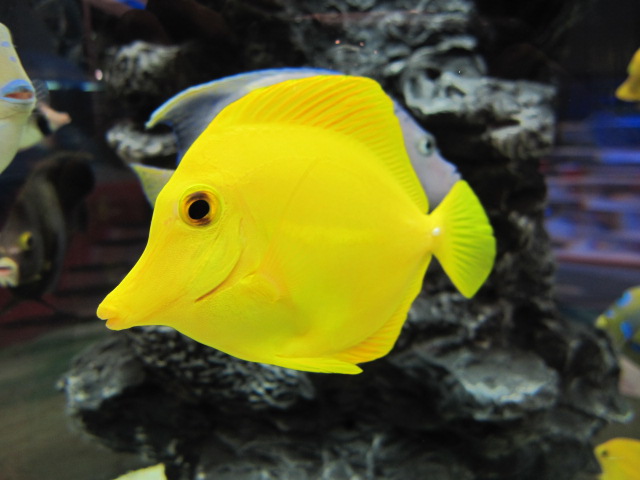
Do You Need A Filter For A Fish Tank

Although the simple answer to this question is actually: No, you don’t need to have a filter in your fish tank. If you have a fish tank, or you simply want to think of fish keeping as a common hobby, you might think, does your fish tank need a filter? Let us first understand that the filter as a tool can help your biological filtration in your tank. In other words, in most cases, you need to use a filter in your tank to achieve the purpose of biological filtration.

But this article will go a bit deeper so you can understand exactly what filters do and why most people recommend them, even if they are not necessary for tanks.

There are some things a filter can do for your tank:

1. The filter keeps the tank clean by removing debris and toxins such as ammonia and nitrates.

2. Filters can help water oxidation by creating surface agitation.

3. Filters provide a place for beneficial bacteria to grow it’s important to know that all aquariums require some form of biological filtration, and filters are the easiest way to achieve this.

Biological filtration is 100% necessary in any aquarium to help reduce toxins and reduce the amount of maintenance required.

However, not all healthy fish tanks require the use of mechanical and chemical filtration.

A simple example: carbon or any other form of chemical filtration should only be used when needed. Another thing to consider when considering adding a filter is that some people (though not recommended) use small fish tanks, vases, and bowls to raise fish. In this case, due to their small size and a small amount of water, it is difficult to provide proper filtration, and in some cases, water needs to be changed more frequently every day.

Does the fish tank need a filter?

As mentioned earlier, filters are not necessary to maintain a healthy fish tank. Because what you really need is enough biological filtration in your aquarium. Biofiltration helps to recirculate the water tank, which basically means making sure that the water in your tank is safe enough for your fish to survive and thrive.

The filter decomposes waste (ammonia), converts it into nitrite, and then further converts it into safe and harmless nitrate, filtering out the harmful components of aquatic life in the water.

If you can provide the right amount of biological filtration without the use of a filter, then your fish should be safe.

So while a filter is not necessary for your fish tank, you could be limited to the amount and types of fish you will be able to keep.

Can Fish Survive Without a Water Filter?

There are many types of fish that can do well and survive without a filter.

Here are a few examples:

-Betta fish

-Goldfish.

-Wild-type Guppies.

-Regal White Cloud Minnows.

-Blind Cave Tetras.

-Corydoras.

-Zebra Danios.

However, all fish will do much MUCH better with proper biological filtration and surface agitation to oxygenate the water which is what a filter will do for your tank.

 Do You Have To Clean A Fish Tank If It Has A Filter?

Even with a filter, it is recommended to clean your fish tank at least once every two weeks.

Depending on how heavily you stock your tank and the types of fish you are keeping you may need to clean more often.

You should do your best to clean the sides of your tank, to remove algae and use a gravel siphon to remove any built-up debris.

Finally, our goal as fish farmers is to provide a safe and healthy environment for our fish.

In order for the fish to grow up healthy, we must do our best to create a relaxed, healthy and safe living environment for them. Buying a filter is a good place to start. Filters keep water clean, free of toxins, help water oxidize, and provide the best place for the growth of beneficial bacteria.

As the fish tank shop, We have the best fish tank filter, best fish tank lights, best fish tank ornaments, best fish tank thermometer for sale, If you have any questions, please contact our aquarium expert now! Or you can go to the aquarium product category pages for more information about filters.

Give Your Fish and Aquatic Plants the Right Amount of Light

The aquarium white light is both a design feature and a practical need for your aquarium, and it is very necessary. The soft inner illumination of a lighted aquarium makes it a beautiful element of room decor. The fish and living plants in the fish tank need light to thrive. But determining how much light aquatic creatures like fish and plants need, and controlling the amount of light, can be a tricky issue.

So how much day night aquarium light does the aquarium require? Generally speaking, most aquariums require 8 to 12 hours of light per day (10 hours is a good starting amount) and are provided by the aquarium lights. But this is still a large number range, here is a brief summary of several factors that determine how long your aquarium lights need to be turned on each day:

Number and species of living plants in an aquarium

How much ambient lighting is already in the room

Types of fish in your fish tank

Algae content in the fish tank

Ambient Room Lighting

Deciding how long to turn on the fish tank lights has a lot to do with how much ambient light is already in the room. You may not even need additional lighting at all, for example, if your aquarium is in a bright south-facing conservatory with lots of windows or an active family room with a lot of activities going on with ceiling lights and ordinary lights on most of the time. Ambient room lighting is often rather indirect, though, and chances are good that no matter how much light already is present in the room, you will need to run aquarium lights each day. But a room with good ambient lighting will not need 12 hours of aquarium lights.

In winter, when the natural light is reduced due to the season and the light intensity is weakened compared to the summer, as the distance between the sun and the earth becomes farther, it is always a wise choice to let the aquarium light on with longer time. This will promote better growth of aquatic plants, which will be beneficial to the ecological environment of the entire aquarium. As the time of lighting on the day is extended, the lighting cycle of the aquarium can be shortened.

Light Needs for Different Fish Species

Speaking of the fish itself, the lighting of the aquarium is primarily about you and your behavior, not fish. The lights in the fish tank will make it easier for you to see and appreciate your fish, but it usually doesn’t have too much effect on the fish. The nature of an aquarium, with its four glass sides and relatively small size, means that most fish are getting more light than they do in natural settings, whether or not you are using supplemental lights. Most fish do not mind getting more light. It is particularly worth noting that some species, such as cichlids and tetras, can thrive with less light. For this special case, excessive supplemental aquarium lighting may negatively affect them.

When deciding how much extra light is needed in your aquarium, it’s not wrong to always consider the conditions a species experiences in the wild. Tropical fish have evolved under conditions that provided roughly 12 hours of light each day, so logic suggests that an aquarium with tropical fish will likely need a combination of ambient and aquarium lighting for roughly half the day. To create a more natural environment, match the length of aquarium lighting to what the species experiences in its native environment.

Aquarium Lights and Heat

Remember, the light in the aquarium not only generates light but also a lot of heat sometimes. Lighting types that produce heat include incandescent, VHO-fluorescent, and metal halide. In smaller aquariums, these types can cause a significant rise in water temperature, sometimes enough to kill your fish and plants. If you use one of these types of lights, make sure to monitor the water temperature constantly, and avoid leaving the lights on overnight. Standard fluorescent lights can produce cooler light and are a better choice for most aquariums. You can leave them on for long periods without danger, and many tropical fish and plants thrive under fluorescent lighting. Light-emitting diodes (LED lights) come in a variety of colors, with low costs, cool operation, and ornamental features.

By adding proper lighting to your fish tank, you can ensure that your fish has a healthy growth environment. We provide the best quality freshwater water tanks and aquarium supplies at the best prices. For more information or to make a purchase, please continue to visit our website senzeal.com or call us.

What Kinds of Aquarium Heaters Are There and What Is My Fish Tank Heater For?

An aquarium temp controller is a kind of fish tank equipment used to maintain the temperature of the fish tank water, or more precisely, to prevent the temperature of the fish tank from falling below a certain temperature.

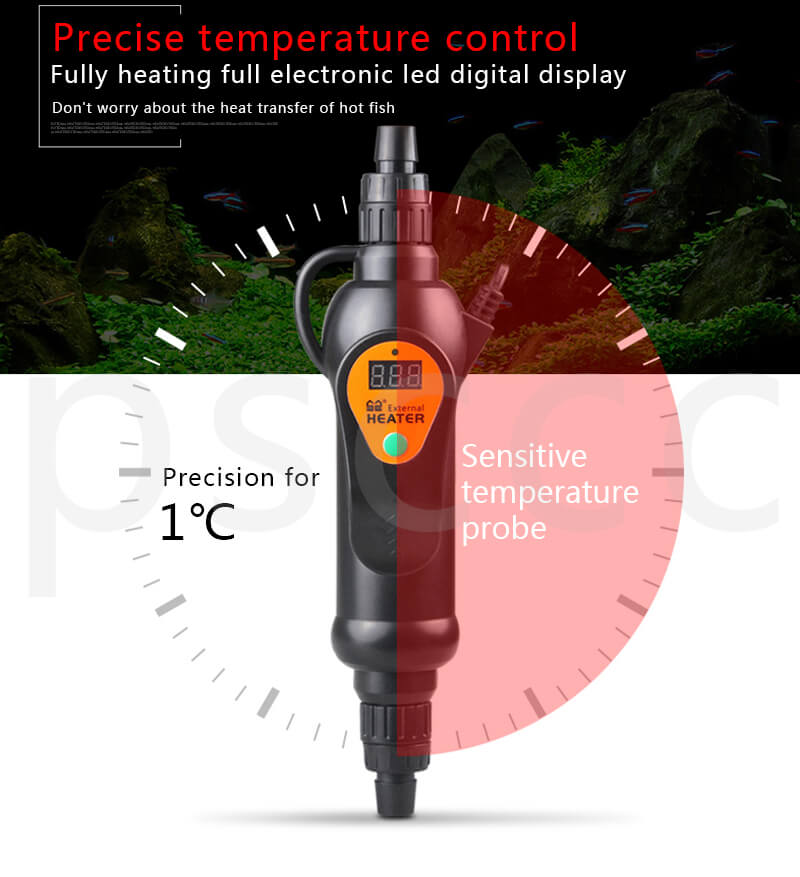
Most aquariums have aquarium temperature controller, but people often ask questions about these very common fish tank equipment. There are several types of aquarium heaters, internal (the heating element is in the fish tank) and external (the heating element is not in the fish tank). There are two types of external heaters: in-line heaters and in-filter heaters, although in-sump heaters are occasionally mentioned. There are three types of internal heaters: hanging, submersible, and substrate. All heaters also need a thermostat to switch the heater on and off as necessary to maintain the desired temperature.

Hanging Aquarium Water Temperature Controller

Hanging heaters are the most common and cheapest heaters. Nearly all aquariums are equipped with a hanging heater to help newly aquarists maintain the correct water temperature for freshwater tropical fish.

These heaters (as the name suggests) hang from the top edge of the fish tank, usually behind the fish tank, and have a glass tube with a heater element inside. A hanging heater requires you to make an opening in the fish tank cover to accommodate the heater’s head, but most fish tank covers have a section designed to accommodate a hanging heater or filter.

It is also important to ensure that your safe heater is right for the aquarium so it doesn’t get knocked about, as this can break the glass sheath on the heater, posing the risk of electric shock to you and your fish, and even the risk of fire.

It’s important to note that hanging heaters are not suitable-or even dangerous-for marine or brackish water aquariums, as salt can enter the tube and cause corrosion or electrical shorts.

Submersible Aquarium Heaters

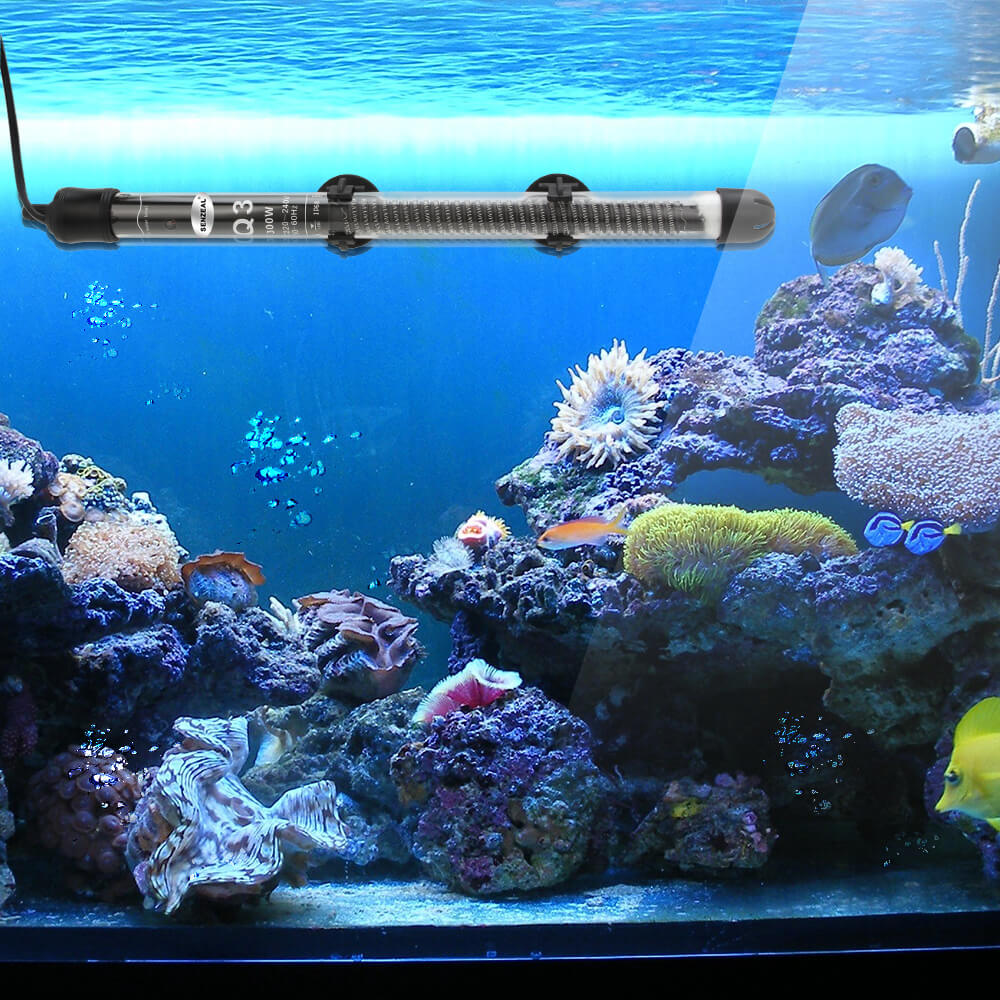
The submersible aquarium heater can be completely immersed in the water of the aquarium. Because these heaters are fully submersible, they are usually more effective than hanging fish tank heaters. These heaters can be placed in the lower water areas. Submersible aquarium heaters can be placed vertically, horizontally, or at an angle, but vertical or horizontal placement works best. If your submersible heater has an internal thermostat, it is usually more efficient if you position it horizontally in the tank, and fairly low in the water column. This will help the thermostat get an accurate reading on the tank temperature and correctly activate and deactivate the heater.

Submersible heaters are usually attached to the rear of the tank with a suction clip. It is important not to keep the heater close to the gravel, as the difference in thermal conductivity between water and gravel can cause the heater’s glass to crack. It is also worth noting that you leave enough space between the heater and the side of the gravel and water tank to ensure that no fish will get caught against the heater and get burned.

Aquarium Substrate Heaters

The least common internal aquarium heater is the aquarium substrate heater whether for hobby or pet keeping. The substrate heater consists of a coil or grid of wire in an insulator buried in aquarium gravel or substrate. The wire itself is the element for the heater, and when the heater is on, this wire becomes warm and heats the gravel in the tank. The heat is then radiated from the gravel to warm the water. When the water becomes warm enough, the thermostat will switch the heater off.

Substrate heaters are considered a particularly beneficial planting tank, where gravel may act as an insulator, keeping plant roots too cold. With a substrate heater, this problem is alleviated because the heater keeps the gravel well and warm and keeps the plant’s roots comfortable.

In-Line Aquarium Heaters

In-line aquarium heaters are external aquarium heaters, which are self-contained but located on or along a part of an external pipe. This is usually a pipe for an aquarium filter or other external aquarium equipment.

In-line aquarium heaters require a water pump to pass water through them. All heaters require water flow. The water is drawn from the water tank, through a tube or pipe, through a heater, and the heated water is returned to the water tank.

In-Filter Aquarium Heaters

Some models of fish tank filters are usually canister filters, but sometimes there are power filters or other types of filters with built-in heating elements. These heaters heat the water passing through the filter and return the heated and purified water to the aquarium. Because these filters are inside the filter and are usually integrated with the filter, they are called in-filter heaters.

In-Sump Aquarium Heaters

Occasionally you may have heard of in-sump aquarium heaters or sump heaters. Usually, this type of heater in the aquarium is nothing more than a submersible aquarium heater installed in the water tank of the trickle filter, not in the aquarium itself. This configuration provides better safety for fish by minimizing the risk of aquarium heaters. More and more militant fish such as Oscars make it less likely to crash or fall into the aquarium heater and break it. It is unlikely that the aquarium heater will be compensated while the aquarium is cleaned and the fish is caught in the back of the aquarium heater and burns.

Other Considerations

It is important to make sure that your fish tank heater is set up so that the fish is less likely to get caught between the heater and other things, such as decoration, the sides of the fish tank, or gravel from the fish tank. It is also critical to ensure that there are enough other hiding places in the fish tank through proper aquarium decoration so that the fish does not feel that the only hiding place is against or behind the heater. A fish that gets stuck between the aquarium heater and something else is definitely at risk getting severely burned, and even fish that feel there is no place else to hide can receive life-threatening burns from your aquarium heater.

Make sure there is water between the tank heater and other surfaces, especially around the components inside the heater. If the glass sheath of an aquarium heater comes in contact with aquarium glass, gravel, or decorations, this may cause glass temperature gradients and cause the glass to break. This exposes you and your fish to electric shock and may pose a fire hazard.

When you first set up your fish tank, or when you get a new heater for your aquarium, remember to always let the new aquarium heater sit in the water of the fish tank, with the heater properly set up for at least half an hour. Turn the heater or start setting the thermostat afterward. This will give the heater time to reach temperature equilibrium and prevent the glass from cracking due to temperature differences when the heater elements are activated. Also, it is important to make sure that the heater has been unplugged for half an hour or more before removing it from the fish tank. Make sure the glass is cool. It is impossible to break the glass in contact with air (or other surfaces) or due to water evaporation and prevent the heater damage from causing damage by burning or melting anything it may be set on.

Looking for more aquarium products? Visit our aquarium product category pages to choose for your own.

Water temperature in your aquarium (It’s pretty darn important!)

The water temperature is something you don’t feel very well, but your fish can feel it all the time. This is important because if you don’t monitor the temperature of the aquarium, you’re risking the fish’s life! This article will tell you everything you need to know about water temperature, including why it’s so important and how you can keep the perfect temperature in your aquarium. So keep reading and don’t panic!

The temperature in the wild vs in your tank

All fish have an ideal temperature range, where they thrive. In most cases, your fish does not need precise temperature. This makes sense, in the wild, there is no aquarium heater to keep the water temperature constant. Rain, hot summer days and cold winter nights all work together to ensure that fish in their natural environment do not experience the same temperature for too long.

As a matter of fact, freshwater fish experience daily temperature fluctuations of more than 30 degrees Fahrenheit. Even in coral reef environments, the daily temperature fluctuates between 68-90°F(20-32°C). If so, why do we insist that our fish tanks maintain a constant and stable temperature? It all depends on how fast the temperature changes. Because oceans and rivers contain so much water, it can take a long time for temperatures to rise or fall. The change in temperature can take a day or even a season to complete. Your aquarium, on the other hand, is not so lucky. The small amount of water can quickly heat up or cool down based on the temperature outside the tank. It is this rapid change in temperature that is the problem. So in your aquarium, the goal is to keep the water temperature within the range your fish, invertebrates, plants or corals like.

Temperature and fish health

Fish can’t regulate the temperature in their body-when the temperature of the water changes, their body temperature also changes. Water that is too hot or too cold can be uncomfortable. In the wild, cold fish swim to warm waters. Similarly, warm fish will find a cold place. There is no escape for your fish in the aquarium, even if they wanted to! Unfortunately, this temperature can have a negative impact on the health of your fish. In particular, the water temperature has a direct effect on your fish’s metabolism. If the water in your tank is too cold, then your fish’s metabolism will slow down, which leads to your fish becoming sluggish and sleepy.

On the other hand, too high water temperature will speed up fish metabolism. Your fish will become more lively and even extremely active. Although this doesn’t sound terrible, these rapid fluctuations in temperature have been proven to cause stress in your fish. Stress is arguably the leading cause of ornamental fish death. Pressure from temperature fluctuations weakens the fish’s immune system. Even fish that are briefly exposed to temperature fluctuations are less resistant to disease and parasites.

How do you maintain the ideal temperature in your aquarium?

Now that you know why the right temperature is so important, it’s time to keep it. If you know the temperature in the fish tank, you’re half done. Unfortunately, warm water and cold water look the same. That’s why you need an accurate fish tank thermometer to detect the tank temperature. It’s an essential product for every aquarium! With the thermometer ready, it’s time to take a closer look at how to maintain the perfect temperature for your fish.

Getting the basics right

It all starts where your fish tank is placed. Airflow from open windows or air conditioning vents can quickly cause the temperature in your fish tank to plummet. Similarly, the midday sun shining through your window into your fish tank will cause the water temperature to soar. That’s why it’s so important to choose the right position when setting up your fish tank!

Aquarium heater adjustable temperature

What if the water temperature in the aquarium is too low? It’s time to turn on the aquarium heater controller! Heating your fish tank is very simple. All you need is a good fish tank heater. This lightweight little device is underwater and will continue to heat your water until it reaches the temperature you want.

Cooling your aquarium

If you live in a warm area, you may have the opposite problem. The hot weather makes the water in your fish tank too hot. The cheapest way is to use a fan. Although any old fan will do, there are specially designed fan systems to keep your fish tank at the correct temperature. If your tank is large, you may find that the fan is not enough to lower the temperature. In this case, you can choose to use an aquarium cooler-essentially a canister filter that cools the water flowing through it.

Stable water temperature in the range of a few degrees is recommended to keep everything happy and healthy in your aquarium. With the help of heater and coolers, keeping your fish tank at a suitable temperature has never been easier!

Do you have a temperature reminder? If not, you can start getting one aquarium heater with temperature control by visiting our aquarium product pages.

Best Filter for a Shrimp Tank

In recent years, shrimp tanks have become increasingly popular in the aquarium world. As shrimp owners know, maintaining the environment in which shrimp can thrive is as vital as keeping them vigorous and happy.

A properly equipped filter will provide a quality water environment for your shrimp. This article will attempt to take a closer look at the exact features and benefits needed to choose the best filter for your shrimp tank (and avoid common mistakes).

Keep Shrimp and Filtration Needs

For those new to the aquarium, setting the right filter in the aquarium can be confusing and impossible for them to get started. You can begin to provide a clean and healthy environment for your pet shrimp from the water itself by setting the right water conditions.

Shrimp are much more sensitive to water conditions than much tropical fish, so it would be helpful to understand how aquarium filters affect water conditions.

Water Chemistry

pH: is a measurement of how acidic or alkaline the water is. That measurement is expressed as a number on the P/H scale. Most shrimp will prefer pH levels ranging from 6.5 to 9.5, depending upon the species.

KH: is also referred to as temporary hardness, and measures the water’s ability to absorb increased acid without changing the pH level.

GH: is also referred to as general hardness and indicates the temporary hardness levels combined with dissolved ions.

It is helpful to study the types of shrimp you plan to keep, as you will have basic knowledge about the pH, kH, and GH ranges they can tolerate. Chemical change of water is usually done through the chemical processes before it is added to the tank. But you still need to know that some materials used in filter media can change the level of the three numbers mentioned previously. There are some testing tools to help you monitor the chemical composition of the water in the tank.

Water Cycling

When you have set up your new aquarium and the water in it has completed the required circulation, you can add your shrimp into it. The water cycle helps build a nitrogen cycle, a process that converts ammonia, which is fatal to your shrimp, into less toxic nitrite and then into safer nitrate. This process is done with the help of beneficial bacteria that settle in your shrimp tank.

Although good and beneficial bacterial species can grow over most surfaces of fish tanks, filters are often their ideal settling place. Beneficial bacteria are a key component in biological filtration. This short video provides a diagram breakdown of the Nitrogen Cycle.

Water circulation in a new water tank is achieved by adding ammonia to the water column. In the past, this process could have taken months, and some amateurs would use live fish as a source of ammonia. Thankfully, cycling can be accomplished without sacrificing pets by using a piece of food or chemical starters.

Filtration Methods

To keep the water column clean, your aquarium equipment will provide three methods of filtration: biological, chemical and mechanical filtration. Many shrimp keepers value the biological and mechanical filtration of shrimp aquariums, but your shrimp or water may require additional chemical filtration from time to time.

Aquarium filter types 

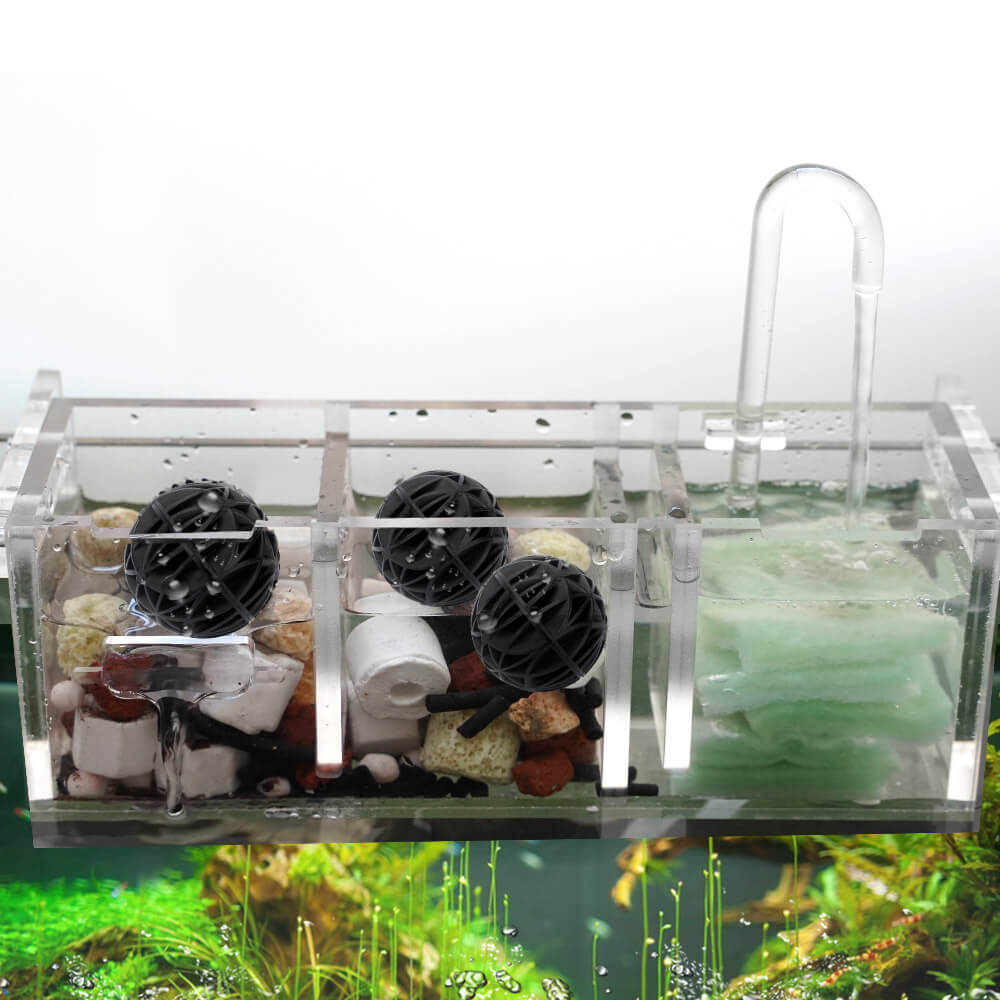
Biological Filtration: is accomplished through the Nitrogen cycle discussed previously. Filter media used for biological filtration are designed to provide surfaces where bacteria can establish healthy colonies. Keeping ammonia and nitrite levels low will allow your shrimp to thrive.

Chemical Filtration: uses materials such as activated carbon to leach chemicals from the water column. Introducing materials like peat can influence pH levels as well. Most shrimp keepers adjust water chemistry outside of the tank and use chemical filtration on occasions such as removing excess medicine from the water.

Mechanical Filtration: will use items like filter floss or foams to strain the water column as it types of Filters

Some filter designs work better than others in a shrimp tank. Filters types to consider include:

The sponge filter is placed inside the aquarium. It is a tool that provides good biological and mechanical filtration. Some shrimp keepers prefer sponges to prevent fry and shrimp from being sucked into the filter, which is a wise action.

Hanging filters or hob filters are placed on the tank wall to provide all types of filtration. Shrimp will benefit from the additional aeration provided by these filter models.

The canister filter is an external system, which means it needs to be installed outside the tank. It can provide all types of filtering methods. This type of filter device can handle a large amount of water, which may be very redundant for a smaller shrimp aquarium and is not recommended.

The under gravel filter is located under the substrate in the tank. If you plan to use a better substrate than many shrimps prefer, this type of filter may struggle to function properly under them.

Most filters use intake to absorb water. Be careful, shrimp and fish fry may be sucked into the filter. You can choose to use a sponge or an elasticated pantyhose to help prevent this from happening. Otherwise, you will have a lot of tedious work to do to save your shrimp and fish fry.

There are also some filter intakes specifically designed to prevent fry from entering the filter intake. You can also buy this model directly.

Here’s the best filter for a shrimp tank. If you have any questions, please contact our aquarium expert now! Or you can go to aquarium product category pages for more information about filters.

Aquarium Filtration – Why Is It So Important?

The reason for adding a cheap aquarium filter to the fish tank is to remove toxins, odors, and discoloration from the water, including nitrate and ammonia. We also need to add oxygen to the water.

It is important to have a clear understanding; If you are a beginner, we have explained the role of filtering for you to read.

What is the filtration?

“The general cleansing process of a contained body of water.”

There are several ways to filter in nature. For example, in a body of water, the water stream steadily flows down unwanted substances. A large number of other life forms occupy the waters and also help to ensure that lakes and rivers remain clean.

Unlike natural waters, fish tanks or ponds are smaller and cannot remove unwanted substances and chemicals. Filters do the job.

What do aquarium water filters do?

Effective water filters remove excess ammonia, nitrates and dirt and maintain a healthy, aerated environment in the tank. It’s vital to goldfish care and their life expectancy and shouldn’t be neglected. Water needs to be kept free of toxins and clear.

If you can’t see your fish because of the poor condition of the water, then it’s just a matter of time before your fish will start struggling. At best you’ll be dealing with sick fish and nursing them back to health. If they make it!

There are basically 2 types of unwanted material found in a body of contained water.

1. Material tiny enough to pass through pre-filters.

2. Unwanted material that has the ability to pass through any filter medium because it’s soluble in water. These water-soluble materials include such things as gases and chemical compounds.

Why should I buy a fish tank filter?

Too much dirt can be the cause of death for fish. Reduced oxygen inside the fish tank along with excess nitrates and ammonia suffocate fish.

Poor water condition causes frequent changes to the water temperature which leads to other physical problems for your fish. These may not be immediately apparent.

Colorful aquariums make a room look more vivid and lively, but as you know it’s more important to maintain the aquarium to keep your fish in good health.

By “maintaining” we generally don’t mean simply cleaning the aquarium, but feeding the fish properly and preserving the environment in a way that’s fit for the fish to live in.

Some people may already know what’s required, but for beginners, you should buy a kit that provides the right set up for the wellbeing of your fish. It shows that you care!

An external power filter is a good place to start. It’s a cheap filter with the smaller sizes effective for fish tanks up to 20gal.

When foreign substances accumulate on the tank walls, scrapers are used to remove it during water changes and then the filters can do their job.

(Tip: Introducing some algae eaters into your tank will help with algae control. Don’t be fooled though, these don’t take the place of a filter, just very handy ‘workers’ in the tank.)

Types of filters

Aquarium filters are classed according to the function they perform.

Some of the useful fish tank filters are gravel filters, air-powered filters, internally powered head filters. The choice depends on the type of fish kept in the tank, size, etc.

Small sponge filter are the best choice for betta fish. Bettas don’t like movement in the water.

Also a good choice for a tank with fry. Sponge filters produce very little current and there’s a reduced risk of drawing fry into the filter system.

These are situations where airpower filters are not ideal because they disturb the layer of gravel on the bottom of the tank. This disturbance throws up a lot of dirt which can quickly overload the filter.

For goldfish, Aqueon filters are cheap to buy, and they work. Because the filter pump is submersed in the aquarium, there’s no need for priming at setup or when restarting the filter after cleaning or power interruptions.

There’s a number of aquarium accessories that are extremely important and aquarium filters play a vital role in maintaining a healthy aquarium so your fish can thrive.

Which will I need?

To decide which type and size filter will cope with your needs, you need to

1. relate the filter system to the number of unwanted materials and garbage that the system will have to cope with;

2. understand the system you use will directly affect the level of pollution found in a tank or pond.

Power filter

When looking at filters you’ll come across some complex filter systems. If you boil down their complexity basically, in principle, they all do exactly the same thing. They’re external units that are easy to install.

If an aquarium is stocked with much fish, a more powerful and complex system is needed than if you were only housing 2 or 3 goldfish for example.

Power filters were designed with your goldfish or fish in general as well as the aquarist in mind. They have a 4 stage advanced filtration system, which includes:

Stage 1 – Dense floss removes particles and debris

Stage 2 – Activated carbon removes toxins, odors, and discoloration

Stage 3 – Patented Bio-holster removes toxic ammonia and nitrites

Stage 4 – The diffuser grid removes additional toxins while adding oxygen for more active fish.

It also reduces splashing makes the return process quiet.

If you have any questions, please contact our aquarium expert now! Or you can go to the aquarium product category pages for more information.

The Definitive Guide to Turtle Tanks

Pet turtles kept in aquariums need land and water to survive. Some species of turtles spend 75% of their lives in the water, so they need enough swimming space to move freely. But sometimes they still need a completely dry place, the so-called “sun zone”, to leave the water area and warm the body. Most people do not fully understand the habits and needs of pet turtles, so many aquarium settings are not particularly suitable for them to live.

This article will simply take you through everything you need to know about how to buy turtle tank, including setup, tank equipment, tank size and more …

Turtle Tank Types and Setup

The water tank is usually the most expensive thing you buy for your turtle. Turtles need space for swimming and sunbathing. So do you know how big a water tank you need? The general rule is that 10 gallons of water is needed per inch of the turtle shell. So a 6-inch adult eastern box turtle needs a 60-gallon water tank.

As for the material of the water tank, whether you want to choose an acrylic or glass tank, it depends on personal preference. Acrylic is lighter than glass water tanks, but it is more expensive and more likely to be scratched by pet turtles’ paws.

Most people choose to buy an ordinary tank and then add a sun-dock and light inside.

Turtle Tank Kit Package

If you are looking for the least troublesome starter turtle kit, then you just need to add gravel, water, and heater to complete the settings of your turtle tank after you get it! If you want to make things easier, you can buy a complete kit. But due to the size of the turtle, you will eventually need to upgrade it to accommodate larger size turtles.

The complete kit is equipped with everything you need to build a pet turtle’s habitat, including water tanks, filters and filter media, a platform, lights. It will also come with food, an artificial plant and a screen top with a clip to secure it on. You can always replace artificial plants with real plants, such as hornwort or java moss.

Best Aquarium Filter for Turtles

Turtles produce a lot of waste, so you need to use a good quality filter. If you don’t invest in a decent filter, your water will get dirty and your turtles will get sick. There are special turtle filters to deal with the large amount of waste produced by turtles. In addition, many larger aquarium filters are good to use as long as they have mechanical, biological, and chemical filtration.

If you choose a fish tank filter, choose a filter that is 2 to 3 times larger than the fish tank. You have a few different options when it comes to selecting filters for your turtle tank. The first is to use a canister filter. Canister filters are external units, and although they are usually the most expensive, they are hidden away and kept out of sight. Choose an external filter that will turn the water at least 5 times per hour, ideally 10 times per hour would be better.

The second option is to use hanging filters, which are relatively cheap and don’t take up much space. They are effective, but they need to be placed on a horizontal surface. This is difficult to do in a turtle tank.

The last option is an internal filter or a submersible filter. They are fixed inside the water tank with suction cups. These filters are only suitable for primary turtle tanks. They also don’t allow for much space for media so you’ll find yourself replacing the media frequently.

Overall, the best choice for filtration is a canister filter.

Lights

In the wild, turtles will be exposed to around twelve hours of sunlight per day; they rely on In the wild, turtles will be exposed to about 12 hours of sunlight each day; they rely on ultraviolet light to strengthen the shell and get heat. When in a tank, they will need twelve hours of light per day, but this should not be direct sunlight. Turtles require light for three reasons:

Encourages feeding, breeding and their mood (UVA light)

To strengthen their shell and bone growth (UVB light)

They also need the heat from lights

You have a few choices about lighting, you can choose an all-in-one light bulb combining UVB, UVA, and heat. Or you can choose two different lamps; one for UVB and UVA lamps and the other for heating.

Tank Heater

In addition to maintaining the land temperature of the water tank, the water part of the tank also needs to be heated. Some species of turtles spend 75% of their lives in the water. If the water is too cold, they will slow down their metabolism and infections will soon occur. If the water is too hot, it will discourage them from basking and cause them to develop fungi and bacteria. That’s why it is important to keep the tank water at the right temperature. The ideal water temperature for most species of turtles is between 72 and 80°F.

You can use ordinary fish tank heaters; full-submersible heaters or under tank heaters. Submersible heaters are usually long cylindrical; they are relatively cheap and very effective. They don’t take up much space and are usually the most accurate type of heater. You can also get under gravel/substrate heaters, and whilst they don’t take up much space and stay out of sight, they are nowhere near as effective as submersible heaters. The wattage that you will need depends on the size of your tank.

Basking Dock

In the sun, turtles climb to a baking dock and then climb out of the water to warm up. The easiest way is to buy a pre-built dock. Some people want to maintain a very natural look, so choose driftwood or half-cut logs as a place to bask in the sun. You can make your own DIY platform using stone, rocks, tiles or acrylic sheets. You’ll need to make sure you include a ramp to allow the turtle to climb up onto the platform, and it needs to be large enough for them to move around on.

Are You Ready to Set up a Turtle Tank? Now that you have read through this article, you understand how critical it is to have the correct tank size, proper equipment, and enough time to invest. Once you have all the right equipment, installing a turtle tank is not difficult, but it is important to make sure that all your equipment is suitable for the turtle.

Are you thinking about setting up your indoor turtle tank, or are you planning to change your current tank? If you have any questions, be sure to leave a comment or contact our aquarium expert immediately.

How to Take Care of a Betta Fish: History, Life Span, Feeding, and Tank Setup

If you want to feeding a betta fish while on vacation,there are somethings you need to know.

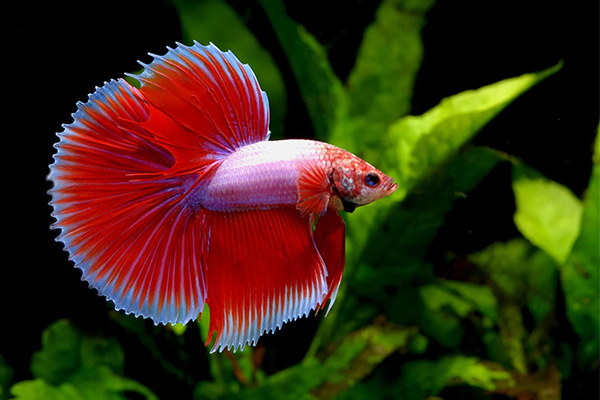
“Betta splendens” is undoubtedly a unique fish. Even among its “labyrinth fish” relatives, such as gouramis (Anabantidae family), a betta is a true standout.

Betta fish has always been a favorite of novices and advanced aquarists. However, despite their popularity in the fish world, many people are still unfamiliar with their care requirements.

In general, this stems from the expectations of bettas, which they believe can be maintained by cheap and widespread exaggeration of their hardiness.

Here are the things you really need to know to take good care of betta, including their history, lifespan, feeding requirements, fish tank settings,such as led light for betta fish tank, mini betta heater. So you can make your betta grow strong and happy.

Get to Know the Betta Fish

But to help them live this long, you will need to provide them with the right fish tank, food, light, and mental stimulation.

Betta fish naturally live in the small, warm standing waters of tropical Southeast Asia, especially Thailand. About 150 years ago, in Thailand, bettas became pets. At that time, children would collect them from rice fields and put them together to watch them spar. As these competitions became more popular, the King of Siam began to regulate and tax betta.

Betta caught European attention in 1840 when the king donated several of them to a Danish doctor named Dr. Theodore Cantor. He researched and bred betta fish, and by the 1890s betta was imported to France and Germany. The first betta did not enter the United States until 1910.

The average life of betta is about 3-4 years. But to help them live this long, you need to provide them with the right fish tank, food, light, and mental stimulation.

Betta Fish Tank Settings

Many people may think that betta can live in a small bowl, which is actually very inaccurate. The fish should not be forced to live in a bowl. The cause of this misunderstanding is not entirely clear, but it seems to stem from the fact that bettas are able to breathe air and survive in hypoxic environments. They are able to do this due to their “labyrinth organ,” which allows them to breathe air to a certain extent. It also allows them to gulp food from the water surface without worrying about the air disrupting their swim bladder.

However, bettas don’t actually like small habitats, but instead, use these environments to evade their competitors and predators (they cannot survive there). Betta fish, like other fish, are also sensitive to the effects of ammonia. They are actually prone to fin rot and other maladies—due to their long fins—and a poorly maintained or undersized fish tank can increase their risk or exacerbate an already developing issue. So, if your pet betta is not attacked by competitors and predators, don’t you want to give them more space to thrive, not just survive?

Betta Fish Tank Size

The minimum capacity of the tank size for a betta is 5 gallons. There is not much swimming space, so you can even make a 10-gallon tank-just make sure the tank is not super deep. Since bettas are used to swimming left-to-right in shallower waters, a deep tank is not ideal for their habits. You should also choose a standard square tank over a bowl. The rounded sides of bowls—and a relatively small opening at the top—seriously limit filter options. Because bettas are very sensitive to bacterial diseases, it is critical that their habitats have an effective filtration system.

Betta Fish Tank Temperature

Betta fish is also sensitive to water temperature, so for tank owners, aquarium heaters are a must not an option for betta fish’s sake. The betta fish strongly prefers temperatures (78-82°F) that are even higher than most other tropical fish.

Feed Betta Fish

As a carnivore, betta fish actually live by eating insects and larvae, so you need to provide them with a balanced fish food rich in protein. Betta fish can be fed flakes, pellets, or frozen foods that are specially made for them. These foods will contain the levels of a protein that suit their needs.

There are two common rules for feeding betta: Provide only enough food to get your fish to finish in 2 minutes. If you have a fish, they will grind when they eat, you can give them 5 minutes. The size of a meal should be equal to 5% of Betta’s body size.

Betta fish have no sensory ability when they are full, so you have to give your betta fish the right amount of food. Do not feed betta more than twice a day.

Betta Fish Temperament

Although bettas may be called “Siamese fighting fish”, they are not as despicable as their fame imagines. The moniker comes from the tendency of male bettas, which are highly territorial, to attack each other on sight. Male bettas have even been known to attack their own image in a mirror. Needless to say, this fish should not live with other bettas (including female bettas); bettas are just too grouchy with each other.

Betta is attractive. There are many reasons to want a pet betta. However, betta fish require the same care and equipment as other fish. They should not be seen as a substitute for lower maintenance replacements.

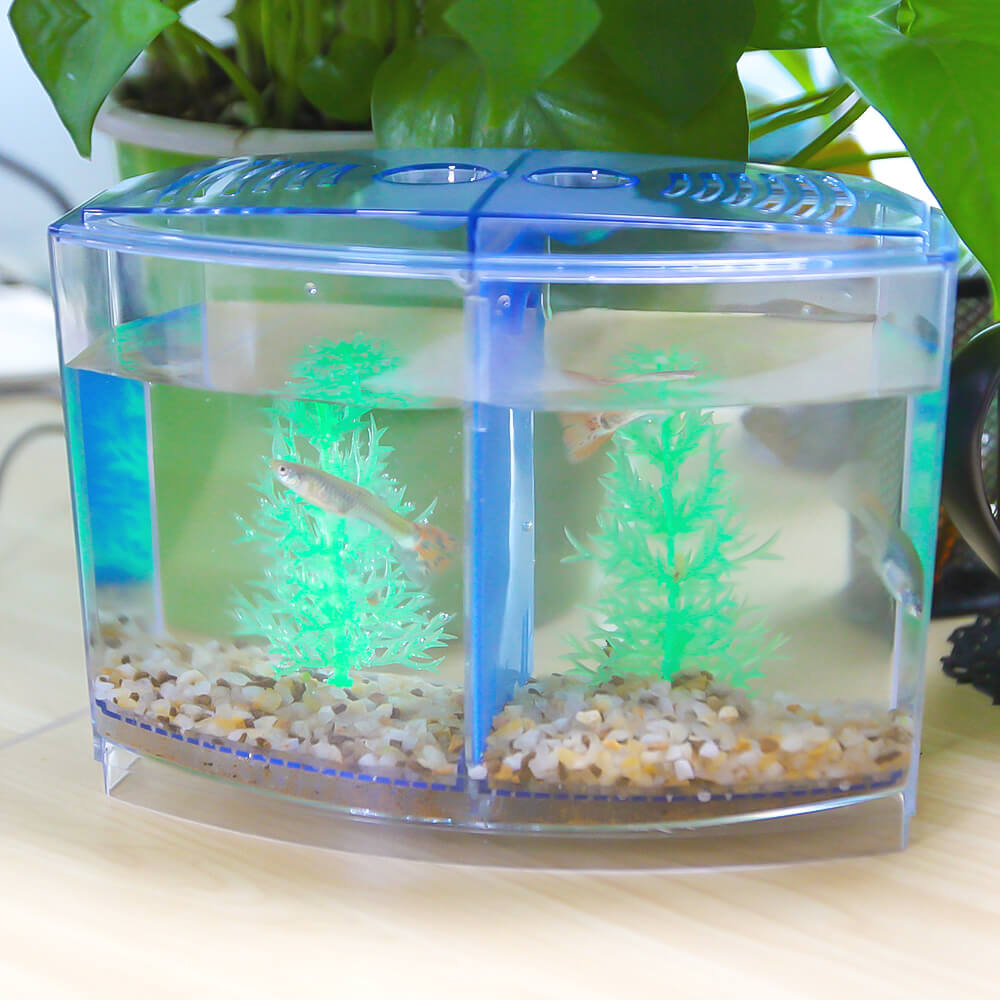
In the last, the only good reason to buy a betta is that you really want a betta. Here’s the Best Double Betta Fish Tank recommended for you.

Aquarium Heater Guide

Best adjustable aquarium heater

The temperature of the fish tank is an important factor affecting the comfort and health of your aquarium fish. One thing you should know is that fish do not produce their own body temperature like humans and other mammals do. They must rely on the temperature of the water in the fish tank to maintain their own body temperature. This makes keeping the temperature of the fish tank very critical for your aquarium pets. This fish tank heater guide covers everything you need to know about heaters.

Do you Need a best aquarium heater controller?

A heater is necessary for most aquariums, and its role is to replicate the natural environment and water conditions to allow certain species to get used to the water tank life. Normally, a heater raises the water in the tank between 76 and 80°F, sometimes slightly colder and sometimes slightly warmer; it still depends on the species you raise. The heater also maintains a consistent temperature using a thermostat which is usually inbuilt. Changes in water conditions can lead to stress in fish which can be fatal if they are exposed to prolonged episodes of stress. Keeping the water temperature consistent mimics their natural environment as large bodies of water (such as the sea) do not drastically and quickly change in temperature.

It is also worth noting that in some countries, fish keepers are facing the opposite problem. The weather is too hot, and their fish tanks are heated too much, causing the water temperature to overheat. In cases like this, you can use aquarium coolers instead of heaters. Some people choose to keep more than one heater in their aquarium, especially if the aquarium is large and is being kept in a cold room. This is ideal because if the first heater stops working, the second one will keep the water temperature at the temperature conditions required by the aquarium creature. If you do choose to keep two heaters, place them at opposite ends of the tank.

Types of Aquarium Heaters

There are many different types of heaters on the market to choose from. Which type of heater you should choose will depend on the size of your tank, the type of fish you raise and your personal preferences.

We will look at the different types and then how you decide which type of water heater is best for your fish tank.

The five main types of heaters are immersible, submersible, substrate, in-line and filter.

Hanging/Immersible Heater

Immersion heaters are also called hanging heaters. It hangs on top of your tank, and the heating element (usually contained in a glass tube) is placed in the water to heat the tank. This is probably the most common heater for freshwater tanks for beginners and is often included as part of the starter pack. You need to make a hole in the hood of your water tank so that this heater can fit on it.

This type of heater is usually less efficient but provides basic heating. Immersion heaters are not recommended for saltwater or saltwater environments.

Submersible Heater

Submersible heaters are installed underwater. This heater should be placed next to the inlet of the filter so that it will heat up the water when it returns to the tank. This heater has a spiral element enclosed in a glass tube or a toughened plastic tube. Glass may crack easily, and if the unit is overheated, tough plastic is less likely to crack. These heaters usually have an LED light on top that will tell you when the heater is on.

This heater will help keep your tank at a more consistent and stable temperature than an immersion heater.

Substrate Heater

These heaters usually complement other heaters and come in the form of electrical wires fixed to the bottom of the fish tank. This type of heater reached its peak in the 1990s, especially in planting tanks, because heating promotes gentle water movement and can stimulate root growth.

These heaters are now less common and quite expensive.

In-line Heater

This heater can be installed between a sump or a filter so that it can heat the water as it returns to the tank.

It is usually made of heat-resistant plastic, so it does not cause a fire. This type of heater is ideal for those that keep larger aggressive fish who fight with equipment, like some cichlids. They are much more expensive than other heaters we are working on. Another disadvantage is that the more components you have outside your tank, the more chances there are for leaks.

Filter Heater

Some filters incorporate a heating element so that when water passes through the filter, it is also heated.

The most common filters with built-in heaters are canister and sometimes power filters.

As long as you know the difference between different types of heaters, it is not difficult to choose the right type of heater for your fish tank. There are five basic types of aquarium heaters: immersible heaters, submersible heaters, substrate heaters, in-line heaters and filter heaters. If you are interested, please go to our aquarium product category pages now!

How to Raise Cichlid Fry to Maturity

Although some species of fish are hard to breed in an aquarium environment, many kinds of the fish can without problems breed in captivity under suitable conditions. Large breeding of cichlids can lay lots of eggs at a time, however, most of the time, only a few fries live on and grow to maturity if left in community tanks. If you are serious about breeding cichlids, and if you choose to raise a giant range of cichlids to maturity, building up a cichlid fry tank separate from the breeding tank is a necessary step. Separate from other fish, your cichlid fry will be likely to survive. Read more to study different valuable recommendations on raising cichlid fry to maturity.

Breeding Cichlids

Raising freshwater aquarium fish is a beneficial and challenging experience. Read on to increase your chances of raising the fry to maturity.

When it comes to breeding fish, cichlids can be divided into two main groups by their breeding methods: one group contains mouthbrooders and the other group contains substrate spawners. Regarding mouthbrooders, the mating process is no different from other cichlid species. However, when the eggs are released by the female, one of the pair will put the eggs in the mouth and keep them until they hatch. In some cases, the female will collect eggs in her mouth, and the male will fertilize them. Once the eggs have hatched, fry tends to stay close to their parents as they grow, relying on them for food and protection.

Substrate spawning species of cichlid can be further divided into groups based on where they store their eggs. Some species spread their eggs over a wide area on substrate and plants while others store them on a flat surface. There are other species that dig a nest in the substrate and store the eggs directly into the nest. Just as breeding mouthbrooding species protect the eggs in their mouths, so will substrate spawners protect their eggs. During breeding, cichlid can become very aggressive and territorial in protecting their eggs and fry.

Nursery Tank

After your cichlids have spawned your first move should be moving the parent fish from the tank if the species you are breeding does not show any parental care behavior. Mouthbrooding species of cichlid and some other species actually care for their fry for several days (or longer) after they hatch. To determine if this is the case or not you may need to do some basic research. If you are able to determine that your cichlids do not typically care for their children it is best to move the adults from the tank as soon as spawning is complete.

When your cichlid fry hatch for the first time, they don’t need much space-they just need a safe environment where they can spend their first days. In the first 5 to 7 days after hatching, the cichlid fry feed on the yolk sac residue, so no feeding is needed during this time. On the contrary, feeding the cichlid fry during this time will only cause the water quality in your tank to decline, because the food will not be eaten by these newly hatched fish. As the fry begin to mature, they can be moved to a nursery or rearing tank. This tank can be small, between five and ten gallons incapacity, and it should be sparsely decorated to make water changes easier. Use water from the breeding tank to fill it and equip the nursery tank with a quality aquarium heater and a sponge filter. It is important that filtration and water circulation be achieved in the fry tank, but you do not want to use anything powerful enough to hurt the fry.

After about a week, you can start making regular water changes, changing 10% to 20% of the water in the water tank, and adding fresh dechlorinated water. Start feeding your fry with protein-rich foods and live foods two or three times a day. Over the next few weeks, the fry should begin to grow and mature, and once they triple their original size you may move them to a grow-out tank – a larger tank where they can grow freely.

Grown Tank

Based on the number of cichlid fry you plan to keep, the size of a grown cichlid fry tank should be between 20 and 30 gallons in size. It’s also a good idea to have enough heating, lighting and filtering equipment. Check the pH frequently and keep it between 7.5 and 8.5, depending on the type of cichlid you want to raise. Although many species can adapt to slight changes in water quality, young fry is likely to be very sensitive and may be harmed by sudden changes in pH or water temperature.

You can show your creativity more when decorating your growth tank-fill the bottom with some kind of dark substrate and give the fry enough place to hide. Use rocks and PVC pipes or clay to make horns and hoe in which your cichlids can hide in. You may also include some live plants like java moss or hygrophila to increase the oxygen content in your fry tank. When decorating your grow-out tank, be sure to leave enough open space for the fry to swim freely – keep the rock caves and piles concentrated in the corners of the tank so the middle remains open. If you continue to feed the fry a healthy, balanced diet you will see them grow fairly quickly.

Last but not least, raising cichlids and fry is a fun and rewarding experience for aquarium enthusiasts, but it also requires a lot of time and energy and extreme patience. In order to properly and correctly breed cichlid fry, you will need several additional fish tanks as the cichlid fry tank and the grown tank. You may even need to divide the fry into several different breeding tanks if some grow faster than others. Once your cichlids have grown to about two inches in length, you can consider putting a few of them into your community tank without overcrowding the tank or selling them to other aquarium owners.

Fish tank led light online shopping, Looking for best biological filter media freshwater, best coral glue etc. Go to our category pages for more information.

通过 WordPress.com 设计一个这样的站点
从这里开始